
High protein? Low fat? What these labels really mean
If you’re in the UK congratulations on making it through yet another week of heatwave, I am regretting choosing to live in the South of England, not sure I can deal with many more days of +30°C weather, when my ideal temperature is about 19/20°C! But I have been enjoying early morning breakfasts outside, while it is still cool.
I know that this weather can also make it really hard to stick to any sort of routine with our food because we don’t want to cook and often just end up reaching for anything that is easy.
In today’s post I am going to help make it easier to understand the labelling on your food so that when you are grabbing something easy you can at least understand how it fits into your goals.
Deep Dive
Food labels are often not written in a way that is very easy to read, especially the nutrition panel – it will show per 100g and then it might also include per g of product or per serving (and a serving is often not what you assume it is!).
Then there are the claims like “high in protein”, “low in fat”, “low in sugar”, it can be hard to know what is real and what is just a marketing claim.
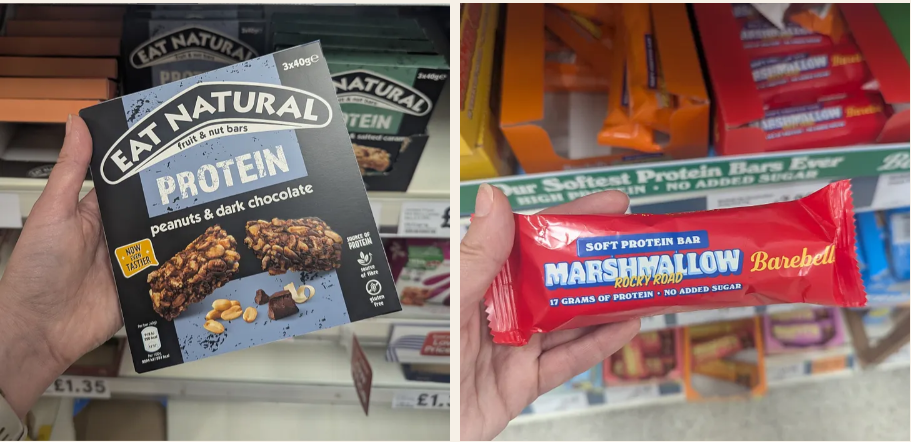
How are you supposed to know if your snack that will actually help you reach your goals or not? I was looking at protein bars recently and found these two examples, both are protein bars and both are around 200 calories, but one of them is 7.8g protein and the other is 17g protein! There is more sugar and fat in the nut bar, which maybe isn’t surprising as sugar (honey) is needed to hold all the nuts together and nuts are high in fat. The nut bar is not an unhealthy choice, but it describes itself as“providing a substantial protein hit”, which is maybe something to be questioned.
If you are looking for a product that is high in protein and want a quick way to tell whether it really is high in protein, then compare the protein in grams to the calories.
- 10g protein per 100 calories, is a good level of protein
- 20g protein per 100 calories is ideal!
And if we go back to looking at this nut bar, another thing to note about the packaging is that they have designed it very cleverly. It does not say on the pack “high in protein”, it just says “protein”, and the marketing material makes sure not to use the word “high”. Technically this product can only be marketed as a source of protein not high in protein, as it does not reach the threshold required to advertise high protein. However, a consumer might not realise that from a quick glance, you might grab it thinking you were getting a protein bar that had a significant amount of protein in.
Here is some wording to watch out for in shops, these are all claims that are regulated, but the wording is very specific, so if the wording differs from this on your pack, the product might not be reaching these levels
“No added sugar” – may contain natural sugars & sweeteners
“Unsweetened” – no added sugar or sweetener, but may contain natural sugars
“Fat free” – no more than 0.5g fat per 100g
“Low fat” – no more than 3g of fat per 100g
“High protein” – 20% of the products total energy comes from protein
“Source of protein” – 12% of the products total energy comes from protein
“Light” – 30% lower in calories or fat than the standard version
“Reduced” e.g. Reduced salt – 30% reduction compared to a similar item
Because they are regulated, if you see these phrases used on pack you can be confident that they are not exaggerated.
But sometimes the small changes in wording can make it hard for us as consumers, would we notice high in protein vs a source of protein, for example? Especially as these often aren’t the only claims on a pack, there could be
- A nutrition claim like “low fat”
- Then a health claim like “Vitamin C contributes to the reduction of tiredness and fatigue”
- Then a sustainability claim about the ethical sourcing of ingredients
- Then a marketing claim that is unregulated telling us the product is “natural”
It is a lot to take in while we are choosing what to buy, and I think the more busy our packs become with these claims there is a risk that we stop looking at all of the information on the pack, because it is too overwhelming.
If trying to decipher the front of pack claims is not what you want to spend your time doing, but you want a way to work out if the snack you are picking up is within roughly the macros you are looking for then keep this as a rough guide, to compare with the nutrition panel on the back of pack (hopefully it is a good panel and shows you the per portion amounts!)
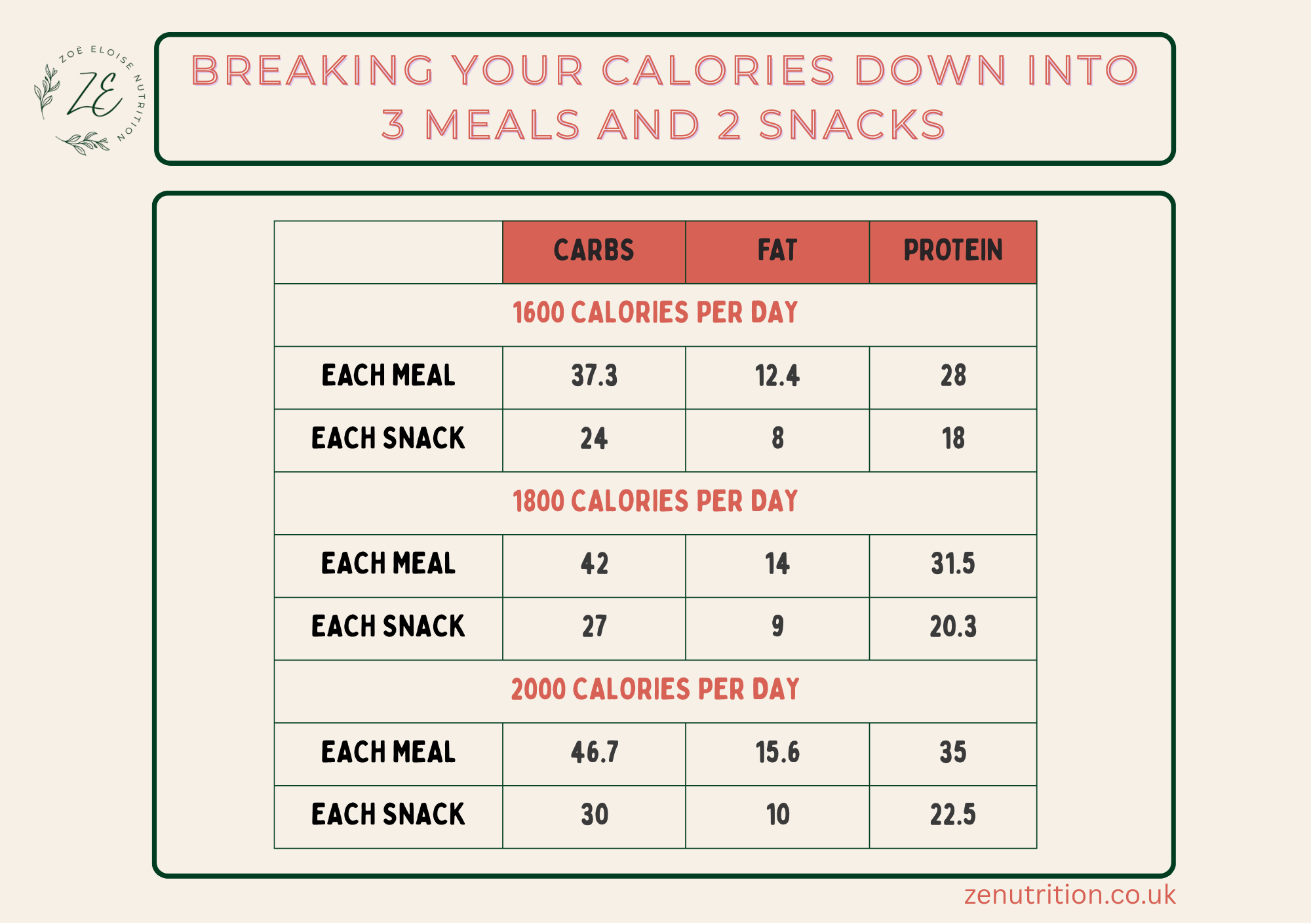
This table is most useful if you have a nutrition based goal at the moment, and maybe you are out grabbing a meal deal for lunch or a snack on the go. You can see that if you were picking up a Pain au Raisin with 40g of carbohydrates and 11g of fat as a snack, while it is delicious and can be eaten as part of a balanced diet, you may need to adjust another meal in your day to keep that balance. But in the moment it can be hard to know what the right decision is, especially when you are faced with a wall of meal deal options for example.
So, this has been a pretty brief introduction into food labels, labelling is so nuanced! Labelling of our food often only shows the key macros not all the vitamins and minerals within a food, it also doesn’t take into account a persons diet as a whole, nor does it show the way some nutrients work together to improve or reduce absorption of vitamins and minerals.
It is a really complex topic, so let me know if you found this interesting and want me to dive deeper into some of the nuance.
The most important thing to remember is to aim for balanced diet, to ensure you get a great mix of nutrients, not over focusing on the numbers!
Favourites
Recipe
Prosciutto and egg muffin
A delicious breakfast for when a simple egg muffin is what is needed but you want to elevate it a little, because who doesn’t like an elevated weekend breakfast?!
Food
Heinz Five Beanz
I recently re-discovered these, they are a great way to get a good hit of fibre and nutrients from a blend of beans instead of just one type. I recommend them loaded onto French Toast with some bacon for a delicious and filling breakfast!
On Social Media
From my feed
Is beans on toast a healthy lunch?
I break down this lunch to show the nutrients we can get and how to make it a balanced meal
Worth your time
Tinned vs. jarred beans
Did you know that how your beans are packed can impact how bloated you feel after eating beans? Dr Emily breaks this down for us!
Work With Me
Are you ready to remove the stress from food?
Whether you want a one-off nutrition plan or ongoing coaching, my aim is to get you to your goals without cutting out food groups or extreme diets. You don’t even have to weigh everything you eat!